
Structural Integration for Runners and Athletes
9 minute read.
Every February a large chunk of this city trains for the Austin Marathon, and every February the same conversations happen. The IT band that only complains on the left. The hip flexor that never quite lets go. The calf that tightens at mile nine no matter how much you stretch it.
Those are rarely separate problems. They are one structure distributing load unevenly, and stretching whichever part is loudest has never once changed which part is loud.
What follows applies to any athlete, and the sport specific section below covers cyclists, lifters and team sport athletes. But runners are the ones who feel it first, because running is the sport that repeats a single movement pattern tens of thousands of times and lets nothing hide.
This article covers the specific ways Structural Integration benefits athletic performance across disciplines, from runners and cyclists to martial artists, weightlifters, and team sport athletes.
The Fascial System as the Athletic Engine
Modern sports science has established that muscles do not produce athletic power in isolation. The fascial network, the continuous web of connective tissue that connects muscles to bones, muscles to other muscles, and the entire body to itself, is the primary medium through which force is generated, transmitted, stored, and released.
Research by Kawakami et al. (2002) demonstrated that the Achilles tendon (a fascial structure) stores and releases approximately 35% of the elastic energy used in running, energy that would otherwise require active muscular contraction. Myers (2001) documented how the fascial lines connect distant body segments into functional chains: the power generated by a pitcher’s legs travels through the sacrotuberous ligament, thoracolumbar fascia, rhomboids, and serratus anterior before reaching the throwing arm. A restriction anywhere along this chain reduces power output and increases joint stress.
An optimally organized fascial system, one in which tension is balanced, collagen fibers are aligned with mechanical load, and layers glide freely, is a prerequisite for peak athletic performance.
Key Performance Benefits of Structural Integration for Athletes
Increased Range of Motion Without Sacrificing Stability
Traditional stretching increases passive muscle length but can reduce the elastic stiffness of tendons and fascial structures that is essential for power generation. Structural Integration increases functional range of motion by releasing fascial restrictions that are mechanically limiting joint mobility, without compromising the elastic stiffness of the fascial network. The result is more available range of motion that is also more controlled and powerful.
Optimized Force Transmission Through the Fascial Chains
When the body’s fascial chains are unrestricted and well organized, muscular force travels through the body with minimal energy loss. Restrictions in the fascial chain, even in areas that seem unrelated to the sport, create energy leaks that reduce power output and increase compensatory strain on adjacent joints. SI releases these restrictions systematically, optimizing the efficiency of the entire kinetic chain.
Injury Prevention Through Tensegrity Balance
Most overuse injuries, IT band syndrome, plantar fasciitis, patellar tendinopathy, rotator cuff impingement, stress fractures, are the result of repetitive loading concentrated on specific structures due to biomechanical asymmetries. When the tensegrity balance of the body is restored through SI, load is distributed more evenly across the entire system. No single joint or fascial structure takes disproportionate wear. This is fundamentally preventive, addressing the mechanical imbalances before they produce injury.
Faster Recovery Through Improved Tissue Fluid Dynamics
The fascial matrix functions as a fluid transport system, facilitating the movement of nutrients into active tissue and metabolic waste products out of it. Restricted fascia impairs this fluid exchange, slowing recovery and increasing post exercise soreness. SI improves fascial hydration and inter layer glide, accelerating the clearance of lactic acid and inflammatory mediators following intense training.
Improved Proprioception and Movement Precision
Fascia contains more proprioceptive nerve endings per unit area than any other tissue except the retina. When fascial restrictions distort the proprioceptive signal, the brain’s movement map becomes less accurate, contributing to coordination errors, delayed reaction time, and increased injury risk. SI restores fascial proprioceptive clarity, improving movement precision and the accuracy of the body’s real time positional feedback system.
Sport Specific Benefits
The fascial pattern that limits you depends on what you ask your body to repeat, so the work tends to concentrate in different places by sport.
- Runners and triathletes: the lateral line through the IT band and the deep front line through the psoas, both of which shorten with mileage
- Cyclists: hip flexors, the anterior chest and the thoracolumbar fascia, all held in a flexed position for hours
- Swimmers: the shoulder girdle and the spiral lines that drive rotation through the trunk
- Lifters: the posterior chain and the ankle and hip restrictions that quietly limit depth and position
- Golf, tennis and racquet sports: rotational asymmetry, where one side of the body has been trained for years and the other has not
- Climbers: forearm and shoulder fascia, plus the hip mobility that decides how close you can stay to the wall
When to Schedule Structural Integration in Your Training Cycle
Off Season / Pre Season
The ideal time for a full 10 Series is the off season or pre season, when training demands are lower and the body has time to integrate the structural changes made in each session. Beginning a series 8 to 12 weeks before the competitive season allows the athlete to enter competition with a comprehensively reorganized fascial system.
In Season Maintenance
During competition season, individual SI sessions targeting specific areas of restriction or post injury recovery are valuable. A general guideline is to avoid intensive fascial work in the 48 to 72 hours before a competition, as the body’s proprioceptive system is adapting to the new spatial organization, and this temporary adjustment period, while entirely benign, is not ideal immediately before a performance event.
Post Injury Recovery
After an injury has entered the subacute phase (pain is reducing and basic function is returning), SI can accelerate recovery by addressing the fascial scarring and compensatory patterns that develop around injury sites. Post injury fascial work prevents the long term holding patterns that often lead to chronic re injury at the same site.
Structural Integration and Professional Athletes
Structural Integration has been used in high level sport for decades. Ida Rolf worked directly with athletes and movement professionals, and practitioners in this lineage have worked with dancers, endurance athletes and professional teams since. We are not going to list organisations we cannot cite, and you should be sceptical of any practice that does.
Notable among sports practitioners is the use of SI principles in elite gymnastics and dance, where the precision of postural alignment and the efficiency of movement under load are primary competitive factors. The fascial reorganization produced by SI provides exactly the combination of mobility, stability, and proprioceptive precision that these disciplines demand.
Frequently asked questions
How does Structural Integration help athletes?
SI improves fascial elasticity and tensegrity, which directly enhances power transfer, movement efficiency, and injury resilience. Athletes also report faster recovery times and reduced chronic overuse injuries.
Which sports benefit most from Structural Integration?
Any sport benefits, but runners, cyclists, weightlifters, martial artists, and team sport athletes commonly report the most dramatic improvements due to the repetitive loading patterns these sports create.
When should an athlete start Structural Integration?
Ideally before an injury occurs. SI is most effective as a proactive performance tool. However, many athletes begin after a persistent injury and find it resolves issues other modalities couldn’t.
Should I get SI during my competitive season?
Individual sessions during competition season can be valuable for addressing specific restrictions or post injury recovery. A full 10 Series is better timed for the off season, as the body adapts to structural changes progressively. Avoid intensive SI work in the 48 to 72 hours before a major competition.
How long before a race or competition should I get a session?
For a single maintenance session, 72 to 96 hours before competition is generally recommended. This allows sufficient time for the nervous system to integrate the proprioceptive changes from the session. Sessions in the 24 to 48 hours before competition are not recommended.
Will SI make my muscles weaker?
No. SI releases fascial restrictions but does not reduce muscular strength. In fact, by improving fascial load transmission and reducing energy leaks in the kinetic chain, SI often improves the expression of existing strength, athletes frequently report feeling stronger and more coordinated following a series.
Do professional athletes use Structural Integration?
Yes. SI has been used by professional athletes across sports disciplines for decades. It is particularly prevalent among professional dancers, gymnasts, martial artists, and distance runners, disciplines where the quality of movement and fascial efficiency are primary competitive factors.
How does SI help with old sports injuries?
Old sports injuries, even those that have ‘healed’, can leave fascial restrictions at the injury site and compensatory patterns in surrounding tissues. SI addresses both the local fascial scarring (releasing adhesions that limit joint mobility) and the global compensatory patterns (releasing the holding strategies the body adopted to protect the injury) that often persist for years or decades after the original injury.
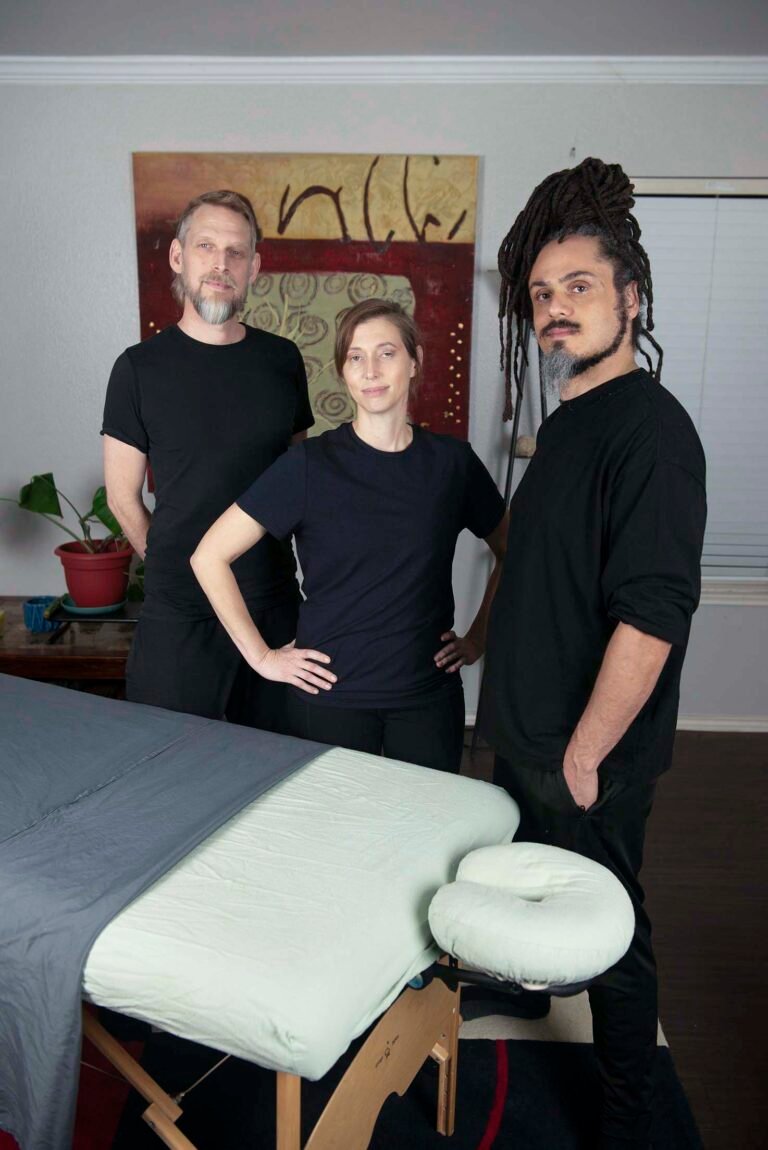
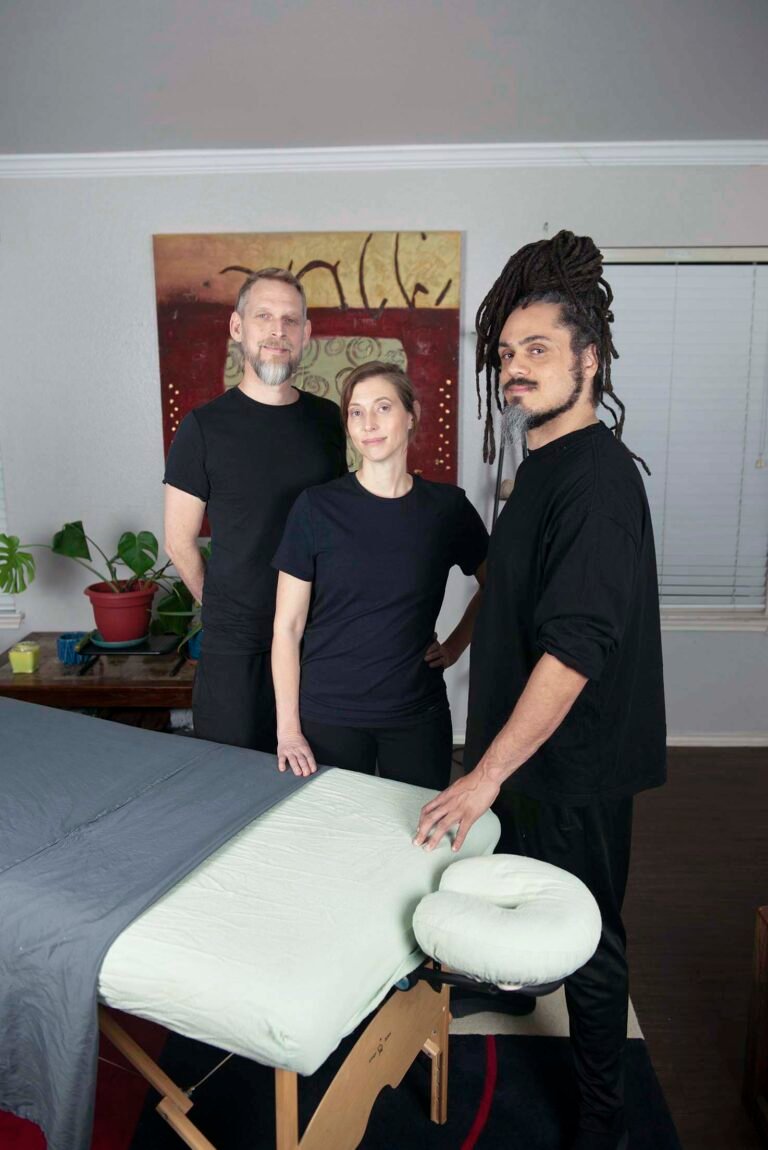
We work with runners and athletes across Austin. More on how we practise here.
Two patterns show up in runners more than anything else: hip flexor pain and the psoas, and the deep hip rotators.
Read next. The 10 Series explained, session by session, what the full sequence actually does.
Start with a free consultation
Book a free 15 minute consultation so we can talk through what is going on, then get your first session on the calendar.
Most of the athletes we see in Austin arrive after the fourth or fifth practitioner has worked the site of the pain rather than the structure loading it. Often they arrive with a word already attached, frozen shoulder being the common one. We are not treating that diagnosis. We assess the structure underneath it and tell them honestly whether we are the right fit. More on the technique on our myofascial release page.