
Our Methodology
Every session on our table is a series of decisions made in real time, matching pressure and pace to what your tissue and nervous system can take right now rather than what a fixed script calls for next. That responsiveness is the whole of our calibration methodology, and it is worth explaining in full rather than leaving it as a line on the homepage.
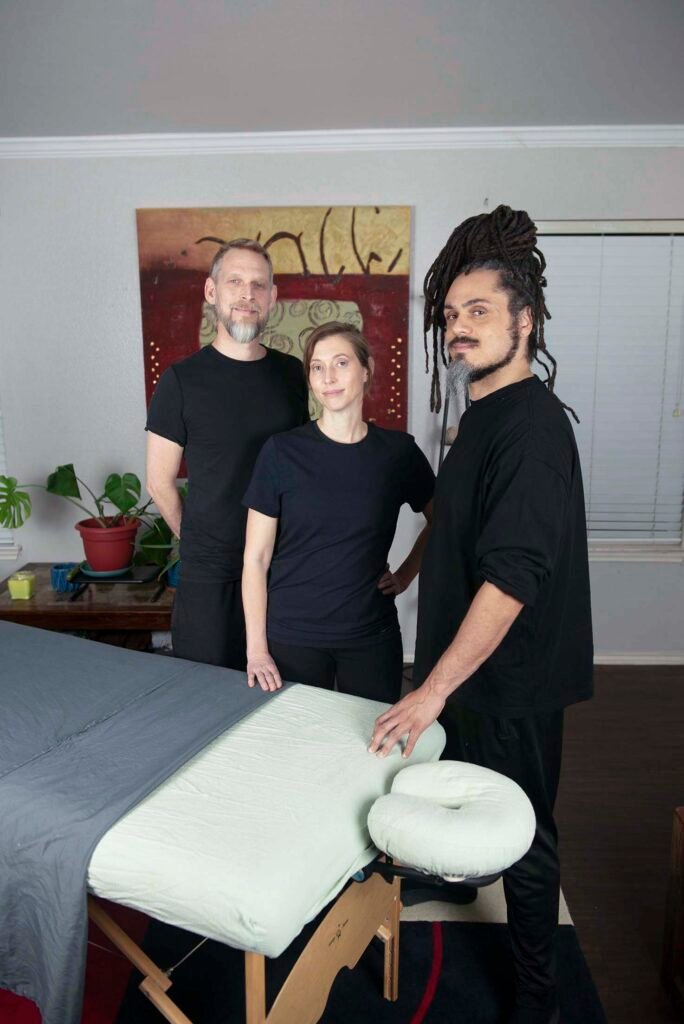
Reading tissue in real time. Every decision recalibrates to what is actually on the table.
What Calibration Means
Two clients can arrive with the identical complaint and leave having received visibly different work. Their tissue responds differently under load, their nervous system carries a different amount of guarding, and the amount of change their body can absorb in one sitting is not the same. We are reading those differences constantly, minute to minute, rather than executing a fixed sequence on autopilot.
None of this replaces structure. The ten session series still runs in the same defined order for every client, a full breakdown of which lives on our page about the series itself. What calibration changes is how much ground each session covers within that order, judged against what we find on the table rather than what the calendar says should happen next.
One Standard, Held By Everyone Certified Here
Practitioners at The Calibration Collective train to one shared method rather than layering in a personal signature. That is deliberate. The result of your session depends on the training every certified practitioner here holds in common, never on which particular person happens to be on the schedule that week. We use the word collective the way a research lab refers to its published findings rather than to any single investigator who ran the experiment. The method carries the credit, and every practitioner here is accountable to the same version of it.
What Guides Every Session
- Structured ten session series, worked in a defined order rather than an open ended stream of appointments.
- Pressure held in the therapeutic range at every point, adjustable by you whenever you ask.
- Manual bodywork rather than medical treatment. We do not diagnose, and we say so plainly the moment something falls outside our scope.
- Referral to a physician or physical therapist whenever that is the right next step, even when it costs us the booking.
- No series recommended unless what we find on the table actually calls for it.
Where the Method Comes From
Our practitioners are board certified in Structural Integration, the lineage of work also known by the trademarked name Rolfing. You can read the difference between the two names on our page on what Rolfing is, and the full session by session logic of the series on our page on the ten series.
Please read. This page describes our internal standard of practice, not a diagnosis or a guarantee of outcome. We do not diagnose, and Structural Integration is manual bodywork rather than medical treatment. If you have been given a diagnosis, or you have pain you have not had looked at, speak with your physician.
Frequently asked questions
Why does the site say we instead of naming a practitioner?
Because the outcome of your session does not depend on which of us is holding the appointment. Every practitioner here trains to the same method and is held to it in the same way, so we describe the work in the collective voice rather than crediting an individual style. The people behind that training are introduced on our page about the practitioners.
Does calibration mean the ten session series changes for everyone?
The sequence itself stays fixed, because working through it in order is part of what makes the series effective. What calibration adjusts is how much a given session asks of your tissue that day, never whether a session gets skipped or reordered.
Is this method evidence based?
It is evidence informed. A growing body of published research supports Structural Integration, and we reference it directly on our pages about the method rather than making claims that reach past what the research currently shows.
What happens if my situation falls outside the scope of Structural Integration?
We tell you directly and point you toward the right kind of care, whether that means a physician, a physical therapist, or another specialist. A session only gets recommended when what we find on the table actually calls for it.
Can I ask a practitioner to change the pressure mid session?
Yes, at any point. Pressure stays within the therapeutic range for the entire session, and you are always the one steering it.
Read next: Meet the practitioners
Start with a free consultation
Book a free 15 minute consultation so we can talk through what is going on, then get your first session on the calendar.