Why Fascia, Not Muscle, Sets Your Posture
12 minute read.
You are not slouching because you lack willpower. Sit up straight right now and hold it. Somewhere between forty seconds and two minutes you will give it back, because you are fighting connective tissue that has already learned a shape.
Posture is not a muscular decision you keep failing to make. It is the resting arrangement of your fascia, the continuous three dimensional web holding every structure of your body in relationship to every other structure and to gravity. Muscles move you inside that arrangement. They do not set it.
This article explores the biomechanical and neurological mechanisms by which fascial restrictions create poor posture, the most common postural patterns driven by fascial imbalance, and the evidence based interventions that address the fascial root of postural dysfunction.
Fascia as the Scaffolding of the Body
Fascia forms a continuous tensional network that interpenetrates and surrounds every muscle, bone, nerve, and organ in the body. Unlike the bones (which provide rigid compression) or the muscles (which provide active force), fascia provides the passive tension that holds the entire system upright and in balance. In engineering terms, this is called a tensegrity system, a structure maintained by continuous tension acting upon discontinuous compression elements.
The architect and engineer Buckminster Fuller originally described tensegrity structures as systems where the integrity of the whole arises from balanced tension. In the human body, fascia is the tensional component. When all tension vectors are balanced, the skeleton is held in optimal alignment with minimal muscular effort. When any part of the fascial network becomes chronically shortened, thickened, or restricted, it pulls the skeleton out of this balance, creating the predictable postural distortions we see in daily life.
The Research: Fascia and Chronic Postural Pain
The link between fascial restriction and chronic pain has been firmly established by modern research:
- Langevin et al. (2011, BMC Musculoskeletal Disorders) used ultrasound imaging to demonstrate that patients with chronic low back pain had thoracolumbar fascia that was significantly thicker and moved less freely between layers than in pain free controls, a direct measurement of fascial restriction’s role in chronic pain.
- Stecco et al. (2013, Surgical and Radiologic Anatomy) demonstrated that the fascial system is densely innervated with proprioceptors and nociceptors, meaning that fascial restriction directly generates the pain signals the brain interprets as postural pain.
- Hansraj (2014, Surgical Technology International) calculated that forward head posture, a nearly universal consequence of smartphone use and desk work, increases the effective load on the cervical spine from 10 to 12 lbs (normal head weight) to as much as 60 lbs at 60 degrees of flexion. This load is borne not by muscle alone, but by the entire posterior fascial chain.
The Tensegrity Model of Human Posture
The tensegrity model helps explain why postural distortions are never truly local. In a tent, tightening one guy wire causes the entire tent to lean. In the body, restricting one fascial line, say, the superficial back line, creates compensatory tension in the superficial front line, the lateral lines, and the spiral lines. The entire tensegrity structure reorganizes around the restriction.
Common Postural Patterns Driven by Fascial Restriction
- Forward head posture. The head drifts ahead of the shoulders and the back of the neck holds it there all day.
- Anterior pelvic tilt. The pelvis rotates forward, the low back shortens, and the front of the hips stops lengthening.
- Thoracic kyphosis. The upper back rounds, the chest closes, and the ribs stop moving properly with breath.
- Scoliosis and spinal rotation. The spine curves and twists, and the fascia adapts around the curve rather than resisting it.
All four are the same story in different places. Tissue adapts to how it is loaded, and then holds the adaptation.
Forward Head Posture (Tech Neck)
The head weighs approximately 10 to 12 pounds. For every inch the head moves forward from its ideal position over the shoulders, the effective load on the cervical spine increases by 10 pounds. The suboccipital fascia (at the base of the skull) and the posterior cervical fascia shorten and thicken in response to sustained forward neck flexion. As this fascia contracts, it pulls the head forward structurally, not just as a result of muscle weakness, but because the connective tissue has physically remodeled into a shortened state.
Anterior Pelvic Tilt (Lower Cross Syndrome)
Prolonged sitting shortens the hip flexor fascia (particularly the iliacus and psoas fascial envelopes) while lengthening and weakening the posterior fascial chain. The result is an exaggerated lumbar curve, forward tilt of the pelvis, and compression of the lumbar facet joints. This pattern, sometimes called Lower Cross Syndrome, is one of the most common postural dysfunctions in desk workers and is driven as much by fascial shortening as by muscle imbalance.
Thoracic Kyphosis (Rounded Upper Back)
The pectoralis minor fascia and the anterior thoracic fascia shorten in response to sustained forward shoulder posture. As these anterior fascial structures contract, they physically pull the shoulder girdle forward and down, rounding the upper back. Stretching alone is rarely sufficient to reverse this pattern because the collagen within the fascia has reorganized into a shortened structure, it requires sustained fascial release to mechanically remodel the tissue.
Scoliosis and Spinal Rotation
While structural scoliosis involves vertebral rotation and wedging of the discs, functional scoliosis is often maintained by asymmetrical fascial tension along the lateral and spiral lines. The spiral fascial line runs from the back of the head, across the back, around the waist, and across the shin, a restriction anywhere along this line creates the rotational patterns seen in functional scoliosis.
How Desk Work and Modern Lifestyle Destroy Fascial Health
The human fascial system evolved for movement diversity, walking, climbing, crawling, squatting, reaching overhead. It maintains hydration and pliability through motion. When we adopt static positions for hours at a day (sitting at a desk, looking at screens), several things happen:
The ground substance of the fascia, normally gel like, stiffens in areas of chronic compression, a process called thixotropy.
Collagen fibers in the restricted area begin to form cross links with neighboring fibers, creating the adhesions that cause restricted movement.
Fascial fibroblasts, sensing chronic load in a particular direction, lay down new collagen fibers aligned with that direction, literally restructuring the fascia into the shape of our habitual postures.
The reduced range of motion progressively reduces fluid exchange within the fascial matrix, accelerating dehydration and stiffening.
The result is a body that has been structurally remodeled by its habitual patterns, a body that cannot simply “choose” to stand up straight, because the tissue holding it together has physically reorganized around its habitual posture.
Steps to Better Posture Through Fascial Intervention
Posture is not fixed by trying harder to sit up straight. These five steps work in order, and each one holds better if the one before it is in place.
Step 1: Fascial Release (Manual Therapy)
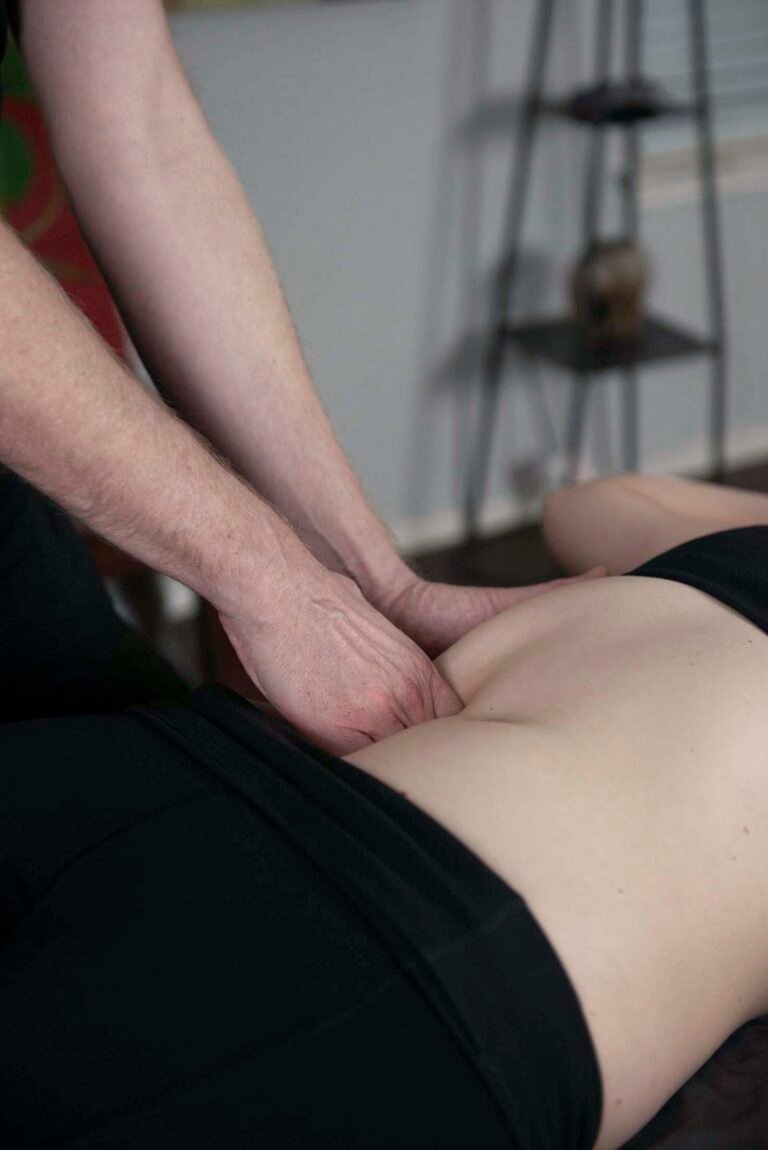
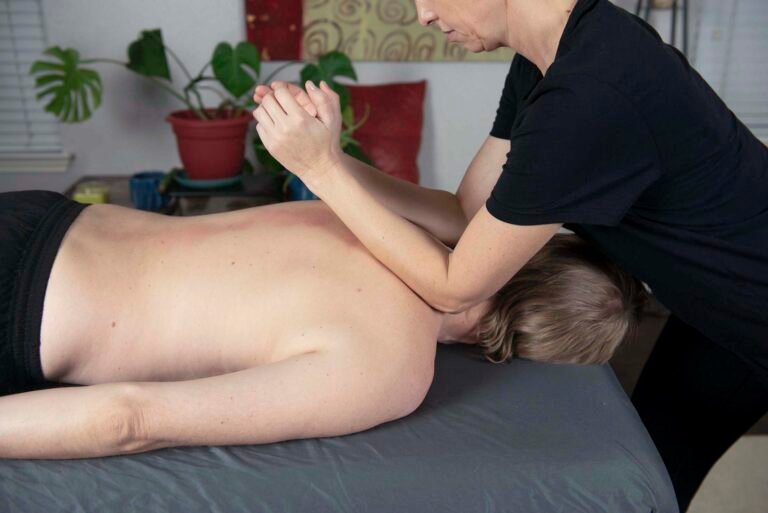
The most effective intervention for fascial restriction is sustained manual pressure, either applied by a practitioner (in Structural Integration or myofascial release sessions) or through self care tools (foam rollers, massage balls). Sustained pressure triggers the thixotropic softening of the ground substance and stimulates neurological receptors that reduce local muscle tone, allowing restricted fibers to elongate and reorganize.
Step 2: Movement Diversity
Fascia maintains its hydration and pliability through movement, specifically, movement in multiple planes and directions. Yoga, Pilates, Gyrotonic, and natural movement practices (crawling, squatting, reaching overhead) are particularly effective at keeping the fascial network hydrated and gliding. Even 2 to 3 minutes of varied movement every 30 minutes of desk work has measurable benefits for fascial health.
Posture Correction Exercises That Target the Fascia
Stretching a muscle for ten seconds does very little to a fascial restriction that took years to form. The exercises below work because they hold a position long enough to load the connective tissue, not just the muscle crossing it.
- Doorway chest opener. Stand in a doorway, forearms on the frame at shoulder height, and lean forward until the front of the chest and shoulders lengthen. Hold for 90 seconds. This loads the anterior thoracic fascia that thoracic kyphosis shortens.
- Wall chin tuck. Stand with the back of the head, shoulders and hips against a wall, then draw the chin straight back without tilting it down. Hold for 10 seconds and repeat ten times. This retrains the posterior cervical fascia behind forward head posture.
- Kneeling hip flexor stretch. Kneel on one knee with the other foot planted in front, then shift the hips forward until the front of the back hip lengthens. Hold for 90 seconds each side. This targets the iliacus and psoas fascia behind anterior pelvic tilt.
- Thread the needle. From hands and knees, slide one arm underneath the body and let the shoulder and upper back rotate toward the floor. Hold for 60 seconds each side. This addresses the spiral fascial line involved in functional scoliosis.
Hold each position long enough for the tissue to soften rather than counting repetitions. If the fascial restriction is established, expect these exercises to make the pattern more comfortable rather than remove it. Removing an established restriction is manual work.
Step 3: Hydration
The ground substance of the fascia, the gel like matrix surrounding collagen fibers, is largely composed of water and glycosaminoglycans (GAGs). Chronic dehydration contributes directly to fascial stiffness. Research suggests that adequate hydration (approximately 8 to 10 glasses of water per day for a typical adult) supports the pliability of the fascial matrix.
Step 4: Ergonomic Optimization
Ergonomic improvements reduce the duration and intensity of chronic fascial load in harmful positions. Monitor height at eye level, keyboard height that keeps forearms parallel to the floor, a chair that supports neutral lumbar curvature, and a standing desk component to allow postural variation throughout the day all reduce the rate of fascial remodeling in dysfunctional directions.
Step 5: Structural Integration (The 10 Series)
For established postural patterns, particularly those present for more than a year, the most comprehensive intervention is a full Structural Integration 10 Series. Each session progressively addresses a different layer and region of the fascial network, systematically releasing the restrictions that have accumulated over years of habitual posture and building toward a globally balanced, gravity efficient structure.
Frequently asked questions
How does fascia affect posture?
Fascia forms a continuous tensional network throughout the body. When restrictions form in one area, they pull the entire structure out of alignment, affecting posture, movement, and pain patterns far from the original site.
Can fascial work improve posture?
Yes. By releasing fascial restrictions and re educating movement patterns, Structural Integration and myofascial release can change postural patterns in ways that muscle focused approaches often do not.
Why do I hunch even when I try to stand straight?
Chronic fascial shortening, often from sedentary habits, old injuries, or repetitive postures, creates structural pulls that override muscular effort. Releasing the underlying fascial restrictions makes correct posture effortless.
How does fascia relate to upper back rounding?
A dowager’s hump, the pronounced rounding at the base of the neck and upper back, is partly caused by thickening and shortening of the posterior cervical and upper thoracic fascia, combined with the structural bone changes that occur over years of sustained forward head posture. Fascial release and structural bodywork may help ease the soft tissue component of this condition.
How do I know if my fascia is tight?
Signs of fascial restriction include reduced range of motion in joints, recurring tension in specific areas of the body despite stretching, chronic pain that seems to move or refer to unexpected locations, a feeling of being ‘held’ or ‘gripped’ in certain postures, and skin texture changes over restricted areas. A trained Structural Integration practitioner can identify fascial restrictions through hands on assessment and visual postural analysis.
Does stretching help fascia?
Static stretching has limited effectiveness for established fascial restrictions because the tissue’s collagen structure requires sustained mechanical deformation (not momentary elongation) to reorganize. Research by Schleip (2003) suggests that holds of 90 to 120 seconds or longer are required to begin mechanically influencing the fascial matrix. Dynamic stretching and varied movement are more effective than short static holds for maintaining overall fascial health.
How does hydration relate to fascia?
Hydration supports the pliability of the fascial matrix’s ground substance and the height of the intervertebral discs (which are approximately 80% water). While hydration alone cannot reverse established fascial restrictions, it is an important supportive factor in overall fascial health and in the effectiveness of manual therapy interventions.
How does Structural Integration fix postural problems?
Structural Integration addresses posture at its root cause, the fascial restrictions pulling the skeleton out of alignment, rather than treating symptoms locally. Over 10 progressive sessions, a practitioner systematically releases restrictions throughout the fascial network, progressing from superficial layers to deep layers, and finally integrating the entire system into a balanced, vertically aligned relationship with gravity. The results are typically more durable than exercise based approaches alone because the tissue itself is mechanically reorganized.
How long does it take to fix posture with SI?
Many clients notice visible postural changes after 3 sessions (the Sleeve phase). Significant, durable changes, including changes in the deep fascial structures that determine spinal alignment, typically emerge after sessions 4 to 7 (the Core phase). A full 10 Series represents the most comprehensive postural transformation available through manual therapy.
Two of those patterns have their own pages, because they are the ones people arrive asking about by name: tech neck and the forward head, and the anterior pelvic tilt and the psoas behind it.
Read next. The thoracolumbar fascia and chronic back pain, where that shape sends the bill.
Start with a free consultation
Book a free 15 minute consultation so we can talk through what is going on, then get your first session on the calendar.
Posture assessment is the first thing we do in Austin, before any hands on work begins. It is also why we look at the whole fascial line rather than the sore spot. Someone arrives having been told plantar fasciitis, and the foot turns out to be carrying something that started at the pelvis. We are not treating the diagnosis. We are assessing what is loading it. More on that on the myofascial release page.